- The Situation Room
- Posts
- The Situation Room - December 24th
The Situation Room - December 24th

Atlas News
December 24, 2025
Good morning everyone,
I’m Atlas, and welcome to The Situation Room! We cover the most high impact geopolitical developments every Wednesday! Merry Christmas Eve!
Today’s topics:
Chief Of Libyan Army Passes Away From Plane Crash
Federal Judge Rules With U.S. Admin Over $100K H-1B Visa Fee
India Strikes Free Trade Agreement With New Zealand
Chief Of Libyan Army Passes Away From Plane Crash
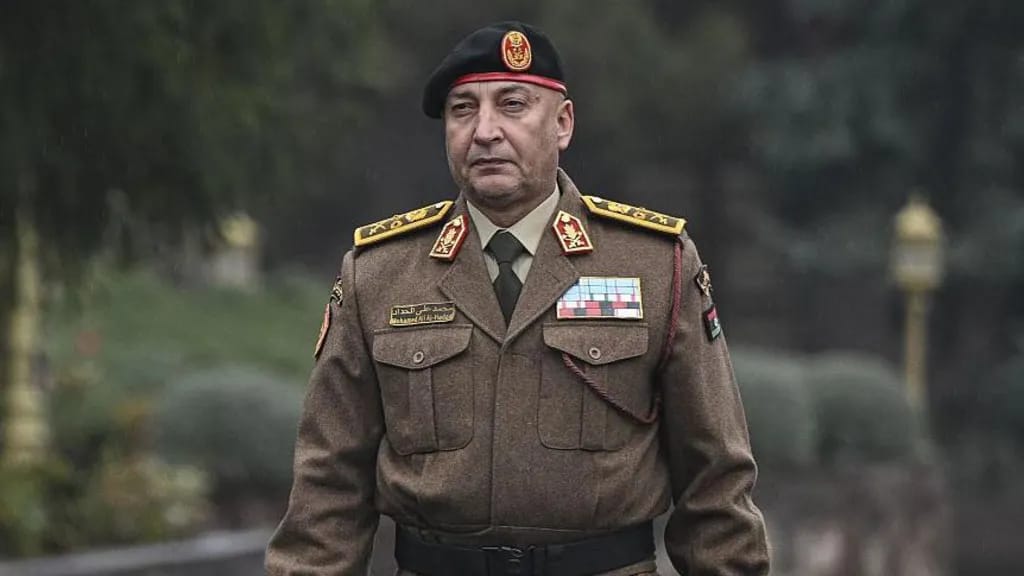
Libyan Army chief Gen Mohammed Ali Ahmed al-Haddad (Anadolu via Getty Images)
By: Atlas
Libya’s Chief of the General Staff, Lieutenant General Mohammed Ali Ahmed al-Haddad, and four other senior military officials died in a plane crash near the Turkish capital Ankara yesterday according to government announcements. The Dassault Falcon 50 business jet carrying al-Haddad and colleagues lost radio contact shortly after takeoff from Ankara’s Esenboğa Airport as it was returning to Tripoli from an official visit, and wreckage was later found near the village of Kesikkavak in the Haymana district.
Libyan Prime Minister Abdul Hamid Dbeibah, speaking on behalf of the Tripoli-based Government of National Unity, confirmed that al-Haddad and four aides, including senior commanders and advisers, were among the victims. The Turkish Interior Minister said an emergency landing was requested prior to the loss of contact, but the plane disappeared from radar before it could land.
Flight details and crash circumstances
The private jet involved in the crash was identified as a Dassault Falcon 50, a three-engine business aircraft operated on a charter service. It departed from Esenboğa Airport in Ankara, Turkey, bound for Mitiga International Airport in Tripoli, Libya. Radio contact was lost approximately 40 minutes after departure, and Turkish authorities quickly initiated search operations for the aircraft and its occupants.
Turkish officials investigating the incident reported that the aircraft issued a transponder distress code and requested an emergency landing prior to the crash. The wreckage was found near the village of Kesikkavak, roughly 70 kilometers south of Ankara, after search teams were deployed. The exact cause of the crash remained under investigation at the time of reporting, with Turkish prosecutors and aviation investigators working jointly with Libyan authorities to determine contributing factors, including any mechanical or technical failures.
The identities of the other occupants included the commander of Libya’s ground forces, the director of the Military Manufacturing Authority, an adviser to the chief of staff, and a military photographer from the office of the chief of staff. Three crew members also perished in the crash, bringing the total number of fatalities on board to eight.
Official confirmation and government response
Libya’s Government of National Unity announced three days of national mourning following confirmation of the deaths of al-Haddad and the other officials. During this period, government institutions were directed to fly national flags at half-mast and suspend official celebrations, including events tied to Libya’s Independence Day observances.
In statements released by the presidency council and government officials, the loss of the military leaders was described as significant for Libya’s defense establishment. The head of Libya’s Presidency Council issued a formal condolence message acknowledging the deaths of the army chief and his aides, noting their roles within the military and their service to the country’s armed forces.
Prime Minister Dbeibah instructed the Defense Ministry to send an official delegation to Ankara to coordinate with Turkish authorities and assist in the investigation and repatriation of remains. The government’s public statements emphasized cooperation with Turkey in the ongoing inquiry into the crash.
Military and diplomatic context
Al-Haddad had served as Chief of the General Staff of the Libyan Army since his appointment in 2020, a role in which he was involved in efforts to unify the country’s armed forces under the internationally recognized government based in Tripoli. His tenure occurred amid Libya’s ongoing political fragmentation and intermittent conflict that followed the uprising that toppled former leader Muammar Gaddafi in 2011.
During the official visit to Ankara preceding the crash, al-Haddad and his delegation met with senior Turkish defense officials, including the Turkish Chief of Staff and the Turkish defense minister, for talks aimed at strengthening military cooperation and coordination. The trip took place one day after Turkey’s parliament extended the mandate of Turkish troops serving in Libya under existing security agreements, reflecting ongoing defense and diplomatic engagement between the two countries.
Turkey has provided military and logistical support to the Government of National Unity in Tripoli in recent years, including deployment of personnel, training programs, and support for joint operations. The continuation of high-level consultations was part of a broader strategy to maintain stability and enhance defense ties between the Turkish government and Libya’s internationally recognized authorities.
Investigation and next steps
Turkish authorities have launched an investigation into the crash, involving prosecutors and aviation safety officials, to determine the precise sequence of events that led to the loss of the aircraft. Initial reports from Turkish officials have indicated that mechanical or technical issues, such as a reported electrical fault, may have contributed to the aircraft’s distress call and subsequent disappearance from radar.
Libyan officials reiterated their intent to work closely with Turkish investigators to ensure a comprehensive inquiry, with particular attention to the aircraft’s maintenance history, flight recorders, and air traffic control communications. The ownership and operational history of the leased Falcon 50 aircraft are also subject to review as part of the investigation.
No final determination on the cause of the crash had been released at the time of reporting, and investigators have not ruled out any hypotheses pending analysis of physical evidence and technical data. The investigation’s progress will be closely watched by both Libyan and Turkish authorities given the high profile of the victims and the potential implications for international aviation safety standards and bilateral military cooperation.
The plane crash occurred amid Libya’s continuing efforts to stabilize its security environment, address internal divisions, and strengthen institutional structures. The deaths of senior military leaders have prompted immediate administrative responses and will likely influence future decisions on defense strategy and foreign military cooperation.

Reply