- The Situation Room
- Posts
- The Situation Room - January 7th
The Situation Room - January 7th

Atlas News
January 07, 2026
Good morning everyone,
I’m Atlas, and welcome to The Situation Room! We cover the most high impact geopolitical developments every Wednesday!
Today’s topics:
Venezuela To Direct Up To 50 Million Barrels Of Oil To The U.S.
China Revokes Dual-Use Exports To Japan
Israeli Foreign Minister Visits Somaliland Despite Backlash
Venezuela To Direct Up To 50 Million Barrels Of Oil To The U.S.
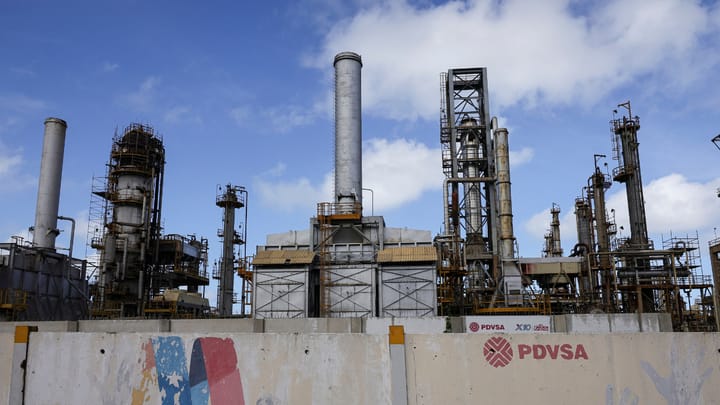
Venezuelan Oil Refinery PDVSA (Jesus Vargas - Getty Images)
By: Atlas
President Donald Trump announced Tuesday that Venezuela's interim government would be "turning over" between 30 and 50 million barrels of sanctioned crude oil to the United States, a deal valued at up to $2 billion that comes days after U.S. forces captured Venezuelan President Nicolás Maduro.
Trump said in a Truth Social post that the oil would be sold at market prices and that he would personally control the proceeds to ensure they are used to "benefit the people of Venezuela and the United States."
"I am directing Energy Secretary Chris Wright to execute this Plan immediately," Trump wrote. "It will be taken by storage ships, and brought directly to unloading docks in the United States."
The announcement follows weeks of a U.S. naval blockade that choked off most of Venezuela's oil exports, threatening a key source of the country's revenue. Much of that crude was intended for China but has been accumulating in storage tanks and tankers anchored in port.
U.S. crude prices fell more than 1.5% after Trump's announcement, with the agreement expected to increase the volume of Venezuelan oil exported to the United States.
Blockade created urgent need for export relief
So much of Venezuela's crude had been sanctioned and building up in storage facilities that it threatened to force the country to start shutting in production, market analysts said.
"This likely represents most of the barrels that have built up during the blockade, both on ships and in overflowing domestic storage — relieving this will alleviate the building pressure to shut-in upstream production," Rory Johnston, an oil analyst who writes the newsletter Commodity Context, said in an email to Politico.
Venezuela has been selling its flagship crude grade, Merey, at around $22 per barrel below Brent for delivery at Venezuelan ports, giving the deal a value of up to $1.9 billion, according to Reuters.
Venezuela's state oil company PDVSA has already had to cut production due to the embargo because it is running out of storage. Without a way to export oil soon, it would have had to cut production further, sources told Reuters.
Johnston said he still has "so many questions about how exactly this is being handled and under which legal authorities."
The United States made a similar sale of sanctioned crude in 2020, when it sold four tankers seized from Iran. In that case, the money went to a fund to help victims of state-sponsored terrorism.
Deal diverts supplies from China to U.S. refineries
The agreement could divert supplies away from China, which has been Venezuela's top oil buyer in the last decade, particularly since the United States imposed sanctions on companies involved in oil trade with Venezuela in 2020.
Chevron, PDVSA's main joint venture partner, has been the only company fluidly loading and shipping crude from Venezuela in recent weeks under the blockade, exporting between 100,000 and 150,000 barrels per day of Venezuelan oil to the United States.
U.S. refineries on the Gulf Coast can process Venezuela's heavy crude grades and were importing some 500,000 barrels per day before Washington first imposed energy sanctions on Venezuela.
Venezuelan crude is heavy and sour, meaning it can only be processed in certain refineries, mostly along the Gulf Coast. The sudden import of that much heavy Venezuelan oil could displace imports from another major source of a similar type of crude — Canada.
"Venezuela crude would directly compete with Canadian crude coming down the pipeline," said Andrew Lipow, head of oil market consulting firm Lipow Oil Associates, according to Politico.
In the first 10 months of 2025, the United States imported approximately 40 million barrels from Venezuela, said Pavel Molchanov, energy industry analyst at Raymond James.
"In principle, it would be possible to accelerate the pace of imports, but bringing in 30 to 50 million barrels would still require a period of months," Molchanov said.
Negotiations focus on sales mechanisms and licenses
Venezuelan and U.S. officials this week discussed possible sales mechanisms, including auctions to allow interested U.S. buyers to bid for cargoes and issuing U.S. licenses to PDVSA's business partners that could lead to supply contracts, two sources told Reuters.
Those licenses have in the past allowed PDVSA's joint venture partners and customers, including Chevron, India's Reliance, China National Petroleum Corporation and European firms Eni and Repsol, to have access to Venezuelan oil to refine or resell to third parties.
Some of those companies have begun making preparations for receiving Venezuelan cargoes again, two separate sources said.
The U.S. and Venezuela have also discussed whether Venezuelan crude can be used to refill the U.S. Strategic Petroleum Reserve in the future, one of the sources said.
It was not immediately clear if Venezuela would have any access to proceeds from the supply. Sanctions mean PDVSA is excluded from the global financial system, its bank accounts are frozen and it is blocked from executing transactions in U.S. dollars.
Delcy Rodriguez, sworn in as Venezuela's interim president on Monday after Maduro's capture, is herself under U.S. sanctions imposed in 2018 for undermining democracy.
Trump administration eyes broader oil sector investment
U.S. Interior Secretary Doug Burgum said Tuesday that increased flow of Venezuelan heavy oil to the U.S. Gulf would be "great news" for job security, future gasoline prices and for Venezuela.
"Venezuela has an opportunity now to actually have capital come in and rebuild their economy and take advantage," Burgum told Fox News. "With American technology, American partnership, Venezuela can be transformed."
Trump told NBC News on Monday that the U.S. oil industry could get new operations in Venezuela "up and running" in less than 18 months.
"I think we can do it in less time than that, but it'll be a lot of money," Trump said. "A tremendous amount of money will have to be spent, and the oil companies will spend it, and then they'll get reimbursed by us or through revenue."
Representatives from Exxon, Chevron and ConocoPhillips are expected to attend a White House meeting Friday to discuss Venezuela, according to a person familiar with the matter.
Oil analysts have predicted that crude output in Venezuela could increase up to half a million barrels per day in the next two years if Venezuela is politically stable and U.S. companies invest there.
"This would still only be about half the level seen in the heyday of oil production," Capital Economics told Reuters.
Venezuela's oil sector holds the world's largest proven reserves at over 300 billion barrels, nearly one-fifth of the global total. Production has fallen, however, the result of years of mismanagement under Maduro and his predecessor Hugo Chávez, worsened by underinvestment, U.S. sanctions and aging infrastructure.
Major U.S. oil companies have greeted the prospect of returning to Venezuela with caution, due to concerns about political instability, a history of expropriated assets in Venezuela and the vast sums required to boost production.
ExxonMobil CEO Darren Woods recently expressed caution about re-entering the Venezuelan market.
"We've been expropriated from Venezuela two different times," he told Bloomberg News in November. "We'd have to see what the economics look like."

Reply